How Ghostwriters Build Authentic Business Stories That Sell
How Authentic Business Stories Actually Drive Sales
Your business stories are your competitive advantage. But most entrepreneurs think they're boring, or they're not sure which ones matter.
I get this all the time. Service providers come to me and say something like: "I'm not a thought leader. I'm not interesting. I just do good work." And what they don't realize is that the "just doing good work" part is exactly the story that matters.
The difference between a business that feels like it has a human behind it and one that feels like a robot sent the email is usually the stories. Not the credentials. Not the certifications. The stories.
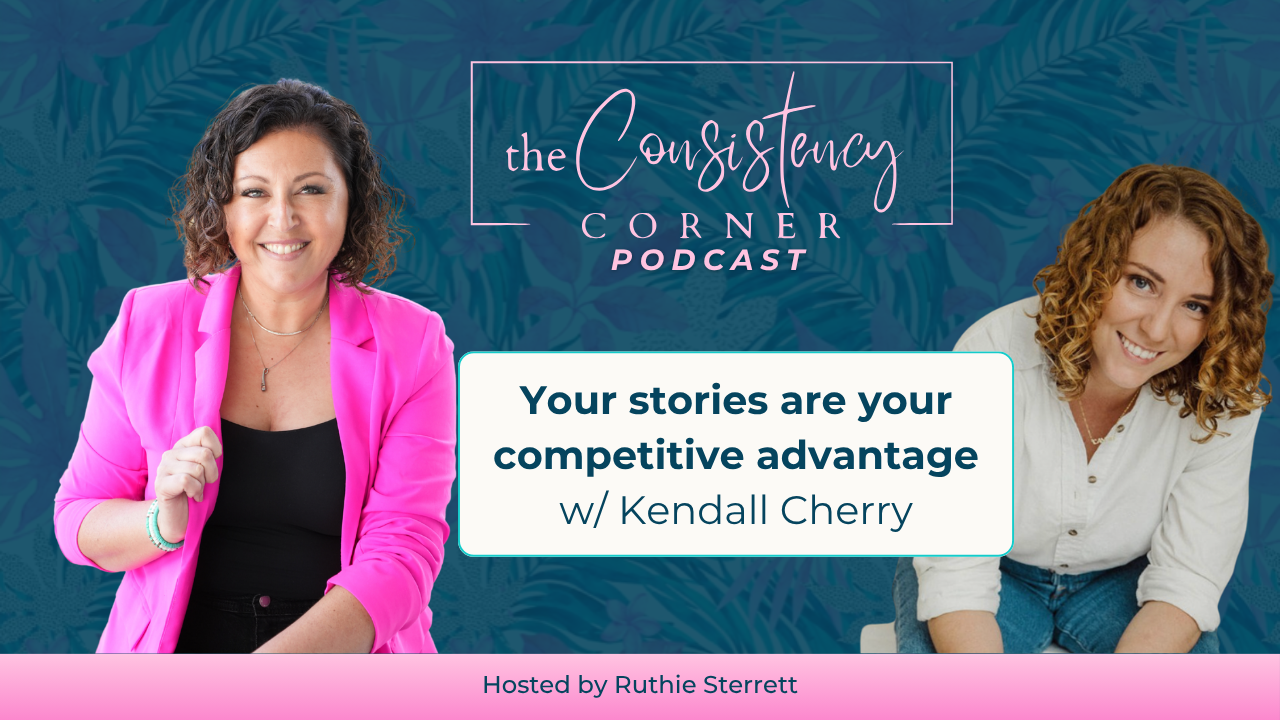
In this article, I'm pulling from a conversation I had with Kendall Cherry, a ghostwriter and author who specializes in helping business owners turn their expertise into strategic storytelling that drives revenue. We talked about how to find your stories, why platforms matter, and how to tell stories in a way that actually converts without feeling salesy.
Why Your Business Stories Matter More Than You Think
Your business stories are the only proof you have that you know what you're doing. Credentials and certifications show people you've been trained. Stories show people you've lived it.
People can feel the difference between a business owned by a human and one that's purely transactional. It's in the words. It's in what you choose to say about your work. And when your audience feels like there's a real person on the other side—someone who gets it, someone who's been there—they're more likely to buy. Not immediately. Maybe not even this quarter. But when they need what you offer, they're going to remember your name.
This is especially true if you're selling to other businesses or running a service-based company. Your audience is on LinkedIn or in your email. They're thinking about their own work, their own problems. A story that shows how you've solved something similar becomes permission for them to hire you.
How Do You Find Stories You Didn't Know You Had?
Most of the stories that matter are sitting right in front of you. You just haven't labeled them as stories yet.
Kendall mentioned something that stuck with me: she does interviews with her clients and will often have to stop them and say, "Wait, hold on. That thing you just mentioned off-handedly? That's an entire story right there. Why are we not talking about that?"
Here's why this happens. You're so close to your own work that you don't see the impact. You do something every single day because it's your job. You forget it was surprising when you learned it. You forget that it solved a problem that other people are still stuck on.
The stories that convert are usually the ones you think are small. They're moments where something clicked. A client had a realization. You realized something about how your client thinks. You made a decision that felt scary at the time but turned out to be exactly right.
Try this: Write down three moments from the last month where you solved something for a client, or where a client told you something surprised them. Don't worry about whether they're "interesting" enough. Just write them down. Chances are, one of those moments is a full article waiting to happen.
What's the Real Difference Between AI Content and Human Storytelling?
The volume of AI-generated content is at an all-time high. And people can feel it. Not consciously always, but in their bodies they can tell whether something was written with a human heart or a robotic one.
What makes something feel human? It's the connective tissue. It's the little details that show you're thinking about your reader. It's the way you acknowledge complexity instead of just listing facts. It's a story that has an origin, shows its history, and explains why that matters.
AI writes in absolutes. It searches for the most statistically likely answer. A human writes from perspective. You say what you think, why you think it, and what you've learned along the way. You acknowledge when something is complicated or when you used to believe one thing and now believe another.
Here's what Kendall said that I keep coming back to: "I make it a point to be very aware of what's being published in the world right now." She reads books, watches films, looks at what themes are showing up in the collective consciousness. Not to copy them, but to understand the lens through which people are seeing their lives. That's what makes her work feel alive. It's not generic. It's connected to what's actually happening in the world.
How Does Authentic Storytelling Actually Lead to Sales?
Most people think selling happens the moment someone buys. But buyer psychology happens way earlier. It happens when someone reads something you wrote months ago and remembered it. It happens when they tell a friend, "This person gets it." It happens in the background, before there's ever an inquiry form.
Kendall shared a story about a client who'd been in her audience for nine years. Nine years. Before she was even doing this work professionally. And when that person eventually needed ghostwriting services, they reached out and said, "I've been watching your career trajectory, and I love where you're going." That's not a cold lead. That's someone who's been convinced for nine years.
This is why the stories matter. You're not trying to convince someone to buy in the next 30 seconds. You're building permission. You're showing them who you are, how you think, and whether you actually understand their world. The sale happens because of the trust. The trust happens because of the stories.
Which Platform Should You Use to Share Your Business Stories?
Not every platform works for every business. And choosing the wrong one means you're spending energy in a place where the right people aren't looking.
Kendall started on Instagram. But when she realized she was selling B2B services, she noticed something: the people who could afford her and who actually needed her weren't opening Instagram to escape and laugh. They were opening it to doom-scroll. LinkedIn was different. People open LinkedIn with an objective. They're thinking about their business. They're thinking about hiring. They're ready to pay attention.
So she ran an experiment. She took all her Instagram content, repurposed it for LinkedIn, and started showing up there. Within 90 days, she was generating leads directly from her LinkedIn posts. The content was the same. The platform was different. And suddenly the right people were seeing it.
The platform you choose should match three things: where your audience is, what they're doing when they're there, and what you're asking that platform to do for your business.
How Does Email Fit Into Your Storytelling Strategy?
Email is the only channel you own. You don't own your LinkedIn following. You don't own your Instagram reach. But your email list? That's yours.
Kendall understood this from day one. She built an email list from the beginning, and it became the backbone of her business. She told me about a client who signed on to work with her after being on her list for three years. Three years. And when they finally reached out, they could recall details from a specific newsletter from two years ago. They remembered the story. They had been building trust the whole time.
Email isn't about frequency. It's about consistency. When someone knows they can expect to hear from you, in a way that feels real and grounded, they start to see you as reliable. And reliability builds trust. Trust builds sales.
The email you send doesn't have to be a masterpiece. It just has to be a real story from a real person. And that's something no AI writing tool can fake.
Your Stories Are Your Only Unfair Advantage
Everyone has access to the same AI tools now. Everyone can hire a ghostwriter. Everyone can learn the frameworks. But nobody can tell your story the way you can. Nobody can show up with your perspective, your lived experience, your specific way of seeing the world.
The businesses that feel alive are the ones where you can tell a real human is thinking. They're the ones where the stories matter more than the sales pitch. They're the ones where someone took the time to figure out which stories matter and then told them really well.
If you know your work is good but you're struggling to talk about it in a way that feels authentic, your stories are waiting. You just have to find them.
Ready to Build a Marketing Strategy Around Your Stories?
We help service-based business owners figure out what to say and where to say it. If you're ready to move from "I don't know what to post" to "here's my story and here's why it matters," let's talk. https://www.theconsistencycorner.com/strategy-studio